Medically reviewed by Dr. Richa Tripathi, MS Ophthalmology
Fellowship-Trained in Cornea & Refractive Surgery
One moment your vision is clear, and the next, everything looks hazy or out of focus. Should you wait and see if it improves — or is it a warning sign?
Sudden blurred vision can have relatively simple causes, such as dry eyes or temporary eye strain, but it can also signal an eye or neurological emergency. Because symptoms alone cannot reliably identify the cause, sudden blurred vision should be assessed promptly, while sudden or severe vision loss requires immediate emergency care.
This article covers what sudden blurred vision can mean, ten possible causes and how they typically present, and — most importantly — the warning signs that tell you it's time to stop reading and get seen. If you're in Lucknow, including Vrindavan Yojana, and looking for guidance before visiting an eye doctor, this should help you make sense of what's happening and what to do next.

What Does Sudden Blurred Vision Mean?
"Blurred vision" can feel different from person to person — hazy or foggy sight, trouble focusing near or far, words that swim when reading, one eye seeing worse than the other, or edges that look distorted or wavy.
Blurred vision vs. sudden vision loss: these aren't quite the same thing, and it's worth telling them apart. Blurred vision means objects look hazy, unfocused, or out of focus. Sudden vision loss means part or all of your usual vision disappears — a blank patch, a missing area, or a sudden dimming. Sudden vision loss, even partial, is a medical emergency and needs immediate assessment, whether or not it's accompanied by other symptoms.
A few questions help narrow things down before you even see a doctor: How suddenly did it start? Is it one eye or both (cover each eye in turn to check)? Is it constant or does it come and go? Are there other symptoms — pain, redness, headache, flashes, or floaters? These factors are exactly what an eye doctor will ask about first.
10 Possible Causes of Sudden Blurred Vision
1. Dry Eyes
Your eyes rely on a stable tear film spread evenly across the surface to keep vision sharp. When that tear film becomes unstable or insufficient, vision can blur — often fluctuating rather than staying blurry all the time, clearing briefly after a blink and blurring again soon after.
Common triggers include long screen sessions (blink rate drops noticeably during focused screen use), air-conditioned or heated indoor air, and windy or dusty environments. Dry eye–related blurring usually comes with a gritty, burning, or tired feeling, and may improve temporarily with lubricating eye drops — though persistent dryness still deserves a proper evaluation rather than ongoing self-treatment.
2. Uncorrected or Changing Eye Prescription
Refractive errors — myopia, hyperopia, and astigmatism — are among the most common reasons for blurry vision overall. Vision can seem to change "suddenly" simply because you finally notice a gradual shift, or because your current prescription is no longer accurate.
This can't be confirmed by guesswork — a proper eye examination and refraction test is needed to determine whether an updated prescription explains the blur, rather than something else.
3. Digital Eye Strain
Extended screen use can cause a cluster of symptoms grouped as digital eye strain, or computer vision syndrome. Reduced blink rate and prolonged close-up work can contribute to focusing discomfort and temporary blurred vision, especially by the end of a long workday — usually alongside eye fatigue, mild headache, or heaviness around the eyes that eases after a screen break.
If blur from screen use doesn't resolve with rest, or keeps recurring, it's worth having your eyes checked rather than assuming it will pass.
4. Contact Lens–Related Problems
Lenses worn too long, deposits on the lens surface, an improper fit, or dryness under the lens can all blur vision. If blurred vision occurs together with eye pain, redness, discharge, or increased light sensitivity while wearing contact lenses, remove the lenses and seek urgent eye care — don't put them back in until an eye-care professional advises you to. Contact lens use is a recognised risk factor for corneal infections, which can progress quickly if left unchecked, so this combination isn't a wait-and-see situation.
5. Cataract
A cataract is a clouding of the eye's natural lens, and it's a good example of a cause that does not typically present as sudden blurred vision — it develops gradually, often over months or years. Typical signs include hazy or cloudy vision that slowly worsens, increased glare or halos around lights at night, difficulty driving after dark, and colours that appear faded.
If your vision has genuinely changed within hours or a day or two, a cataract is unlikely to be the explanation — though a comprehensive eye exam will rule it in or out along with everything else.
6. Diabetes and Diabetic Eye Disease
Changes in blood sugar can temporarily affect the eye's ability to focus, causing blurred vision that often improves once sugar levels stabilise. Diabetes can also damage the retinal blood vessels over time, a condition called diabetic retinopathy, which can cause blurred or distorted vision — and in more advanced stages, sudden vision changes from bleeding inside the eye.
Anyone with diabetes should have regular, dilated eye examinations regardless of whether they currently have vision symptoms, because early diabetic eye changes often don't cause noticeable symptoms until they've progressed.
7. Glaucoma
Glaucoma is a group of conditions that can damage the optic nerve; raised eye pressure is an important risk factor, although glaucoma can also occur when eye pressure is within the usual range. Many forms of glaucoma are silent in their early stages, with gradual, painless vision loss that can begin at the edges of the visual field — which is part of why regular pressure checks matter even when vision feels fine.
The important exception is acute angle-closure glaucoma, a less common but genuinely urgent form in which eye pressure rises rapidly. This typically causes sudden blurred vision along with severe eye pain, headache, nausea or vomiting, redness, and halos or rainbow rings around lights. This combination is a medical emergency and needs immediate attention.
8. Retinal Tear or Retinal Detachment
The retina is the light-sensitive layer lining the back of the eye, and it can occasionally tear or pull away from its normal position. The warning signs are fairly distinctive: a sudden increase in floaters (specks, threads, or cobweb-like shapes drifting across your vision), flashes of light — often described as lightning streaks at the edge of vision — a noticeable drop in vision, or a dark curtain, shadow, or veil moving across part of your visual field.
If you suddenly develop many new floaters, flashes of light, or a curtain or shadow across your vision, seek urgent ophthalmic assessment immediately. Retinal detachment can cause permanent vision loss, particularly when the central retina becomes involved, so urgent assessment and treatment are important.
9. Corneal Problems, Eye Infection, or Eye Inflammation
The cornea — the clear front surface of the eye — is sensitive to irritation, injury, inflammation, or infection, any of which can cause blurred vision alongside redness, pain, watering, light sensitivity, or a gritty or foreign-body sensation. A related condition, uveitis (inflammation of the middle layer of the eye), can cause a similar picture of blurred vision, redness, pain, and light sensitivity, sometimes with floaters, and can come on suddenly.
These symptoms shouldn't be self-treated with leftover or borrowed eye drops. They warrant urgent assessment by an eye doctor, particularly if vision is reduced or symptoms are worsening — this is not a "wait until tomorrow" situation, especially for contact lens wearers.
10. Neurological or Vascular Causes
Sudden vision changes can sometimes be linked to the brain's blood supply or nerve pathways rather than the eye itself. Sudden blurred vision or vision loss can sometimes be a sign of a stroke or transient ischemic attack (TIA, or "mini-stroke"), often remembered by the acronym FAST — Face drooping, Arm weakness, Speech difficulty, Time to call emergency services. Importantly, sudden vision loss or a new area of missing vision can itself be a medical emergency, even without any of the other FAST symptoms — it doesn't need to appear alongside facial or limb weakness to be serious.
Migraine can also cause temporary visual disturbances — flashing lights, zigzag patterns, blind spots, or blurring — usually as part of a "visual aura." However, a first-time or unusual visual disturbance should never be assumed to be migraine on your own, particularly if it's sudden or comes with any neurological symptom; that judgment belongs to a doctor.
It's also worth mentioning that some medicines can cause blurred vision as a side effect. If your symptoms started after beginning or changing a medication, tell your doctor rather than stopping the medicine yourself.
When Is Sudden Blurred Vision an Emergency?
This is the most important section of this article. Not every episode of blurred vision is an emergency, but sudden or significant vision changes should never be automatically assumed to be eye strain or dryness — symptoms alone can't reliably tell the difference, and some causes require urgent treatment.
Seek urgent or emergency medical attention if sudden blurred vision occurs together with:
- Sudden loss of vision, partial or complete, in one or both eyes
- Severe eye pain
- A sudden shower of new floaters, or new flashes of light
- A curtain, shadow, or veil across part of your vision
- A severe or unusual headache
- Nausea or vomiting alongside eye symptoms
- A red, painful eye
- Halos or rainbow rings around lights
- Sudden double vision
- Weakness, numbness, or drooping on one side of the body or face
- Sudden difficulty speaking or slurred speech
- Recent injury to the eye
If any of these apply, go to an emergency department or call for urgent ophthalmic care immediately — don't wait to see if it improves. Even without these red-flag symptoms, sudden or unexplained blurred vision should still be assessed promptly by an eye-care professional.

Blurred Vision in One Eye vs Both Eyes
Whether one or both eyes are affected can help an eye doctor narrow down the possible causes, but it can't tell you at home whether the problem is harmless or urgent.
One eye: more often points toward something local to that eye — the cornea, lens, retina, optic nerve, or its blood supply. Many people don't realise one eye was already blurry until they cover the other, because the stronger eye was compensating.
Both eyes: more often points toward something more general — an uncorrected refractive error, dry eyes, a medication side effect, a blood sugar fluctuation, or, less commonly, a neurological cause. Both categories include conditions ranging from harmless to urgent, so this distinction is a starting point for your doctor, not a home diagnosis.
What Should You Do If Your Vision Suddenly Becomes Blurry?
If the blurring is genuinely sudden or significant, arrange urgent medical assessment; if it occurs with any warning sign above, seek emergency care immediately rather than observing it further. In the meantime, stop driving if your vision isn't clear enough to do so safely. If possible, note when the symptoms started, whether one or both eyes are affected, and whether the blurring is getting better, worse, or staying the same. Don't use anyone else's prescription eye drops or unlicensed home remedies.
How Is the Cause of Blurred Vision Diagnosed?
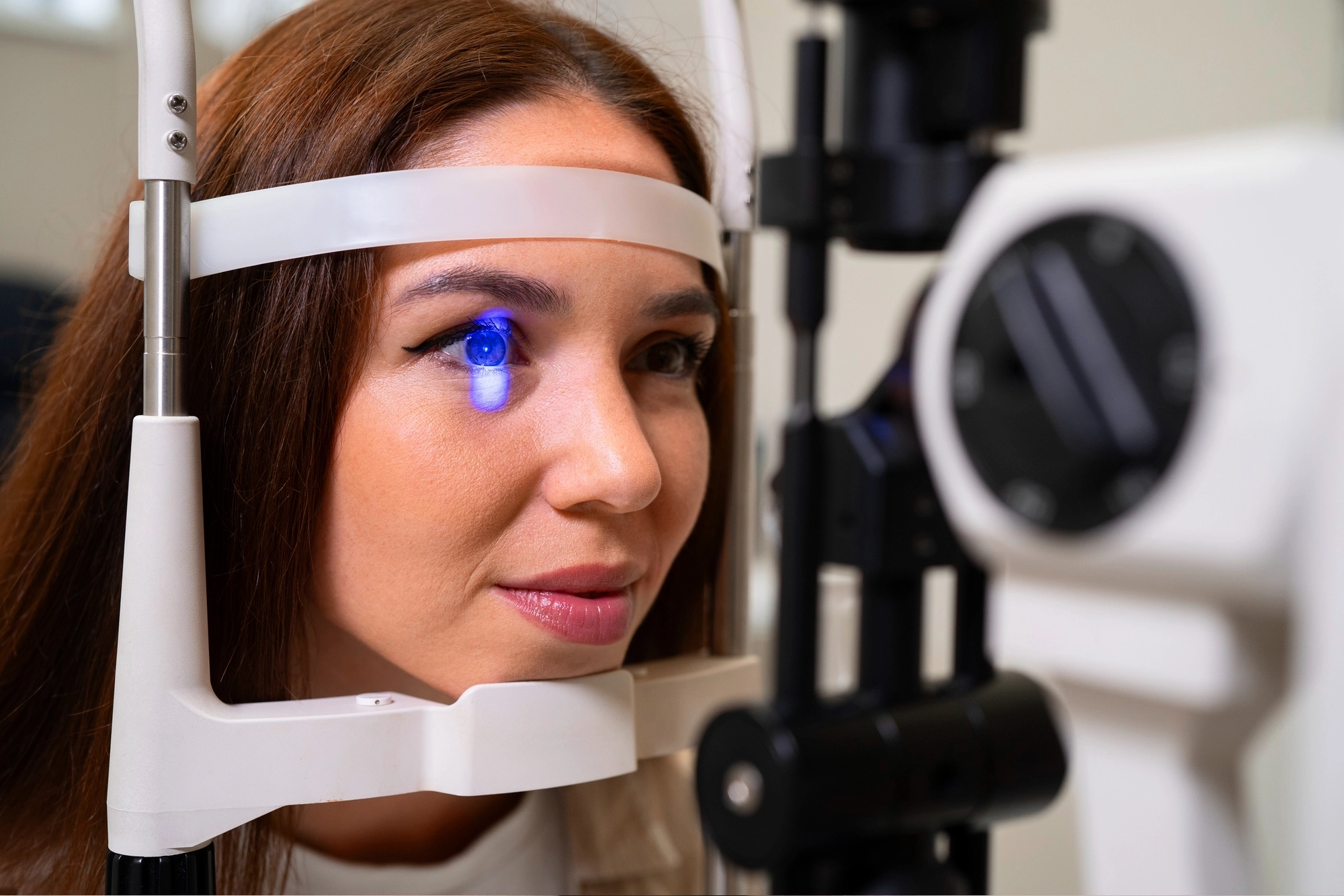
An eye doctor builds a picture of what's happening through your history and a set of focused tests, which may include visual acuity testing (the standard eye chart), refraction (to check whether glasses would correct the blur), a slit-lamp examination (a magnified look at the front of the eye), eye pressure measurement, and a dilated retinal examination to check the retina and optic nerve. Further investigations — retinal imaging, blood tests, or a neurological referral — may follow depending on what the initial exam suggests.
What Tests Are Done for Sudden Blurred Vision?
When blurred vision begins suddenly, the examination is tailored to quickly look for potentially urgent causes based on the symptoms and findings. This may include: eye pressure measurement to check for acute glaucoma, a dilated exam to look for a retinal tear or detachment, and a check of pupil responses and eye movements to screen for neurological causes. Which tests are needed depends entirely on your symptoms and examination findings — there's no single test that rules everything in or out, which is exactly why self-diagnosis has real limits.
Can Sudden Blurred Vision Be Prevented?
Not every cause is preventable — some, like a retinal tear or a vascular event, can happen without warning even in otherwise healthy people. That said, a few habits can help protect your eye health and reduce the risk of some vision problems, even though they can't prevent every cause of sudden vision change:
- Regular eye examinations, even when vision feels fine
- Good management of diabetes and blood pressure
- Sensible screen habits — the 20-20-20 rule (every 20 minutes, look at something 20 feet away for 20 seconds) can ease digital eye strain
- Proper contact lens hygiene, and never sleeping in lenses not designed for it
- Protective eyewear during sports, DIY work, or any activity with injury risk
- Avoiding eye rubbing
- Not ignoring persistent or unusual vision changes
When to See an Eye Doctor in Lucknow
Blurred vision can have simple, everyday causes — but a sudden change in vision should never be brushed aside, especially with pain, flashes, floaters, vision loss, redness, a severe headache, or any neurological symptom. Timing genuinely matters in those situations.
If you're in Lucknow or Vrindavan Yojana and looking for guidance before visiting an eye doctor, this article can help you understand what may be happening and when you should seek care.
An eye doctor in Vrindavan Yojana can assess whether the blurring is related to the cornea, lens, retina, optic nerve, or another underlying condition. Dr. Richa Eye Care provides comprehensive eye care in Lucknow, including evaluation of conditions that can affect vision — if your vision has changed and you're unsure what it means, it's worth getting it looked at.
Medical disclaimer: This article is for general information and does not replace an examination by a qualified eye-care professional. If you experience sudden vision loss or severe eye symptoms, seek urgent medical attention.
Frequently Based Question
Popular Posts
-
Early Eye Symptoms Patients Often Ignore
23 Dec 2025 -

-